Who can Nigerians trust with the responsibility of leading the country?
As Nigeria gradually moves towards the 2027 general election, political conversations are increasingly shifting from personalities and party colours to a more fundamental question: who can Nigerians trust with the responsibility of leading the country?
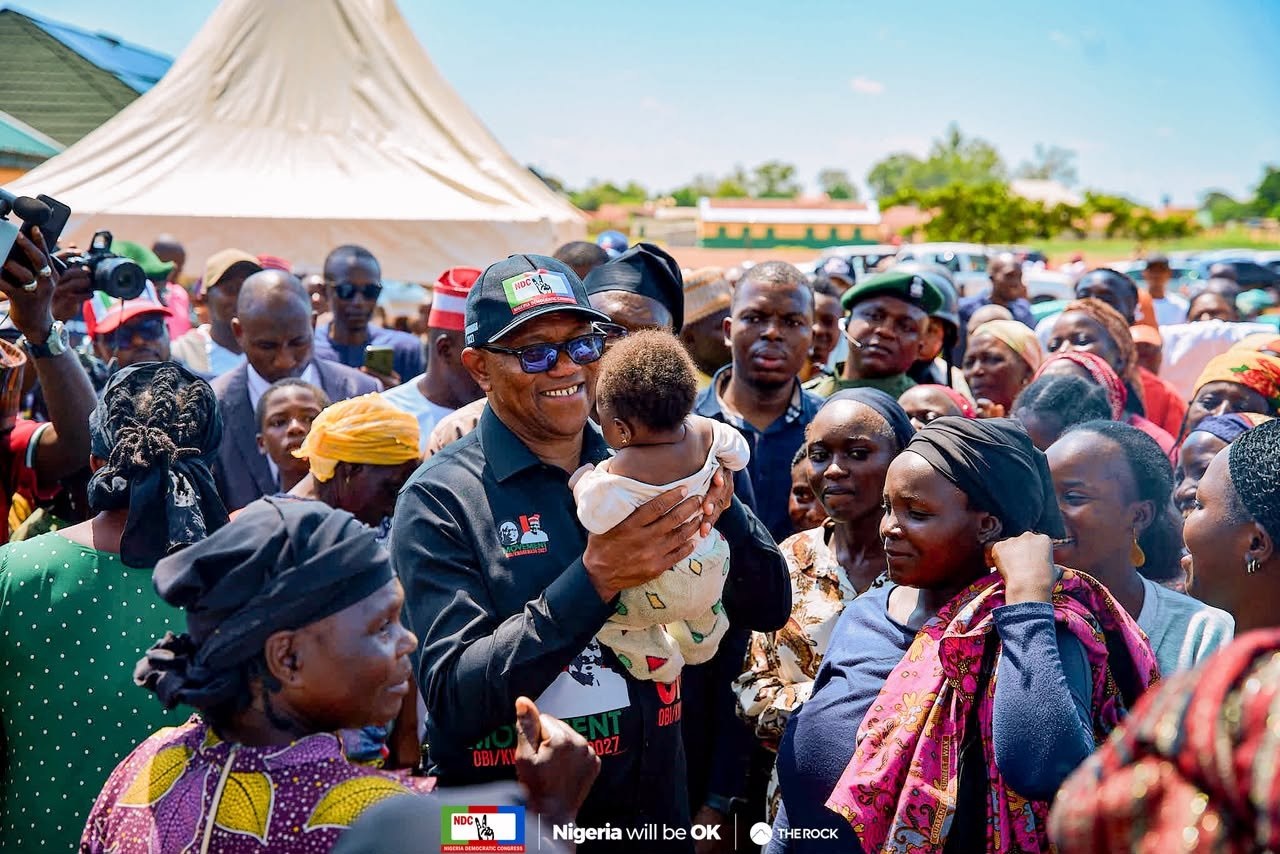
For Peter Obi, the former Anambra State governor a bussinessman and a 2027 presidential candidate of the Nigeria Democratic Congress (NDC), the question of credibility has become particularly significant. His political message has consistently centred on prudent management of public resources, accountability, human capital development and the argument that leadership should be measured by what it gives to society rather than what it takes from it. (Channels Television)
But as the 2027 contest approaches, promises must face scrutiny. Can Obi’s political philosophy withstand the demands of the presidency? And perhaps more importantly, can Nigerians reasonably believe his promise to serve for only one term and return power after four years?
The One-Term Promise
One of the most striking commitments associated with Obi’s 2027 campaign that seem to combat political appetite is his pledge that one can sustainably finish a good work in four years in other language to serve only one four-year term if elected president. A Commitment that doesn’t totally align with a new Nigeria because A good work deserves another chance.
The promise received support from some political allies but has also generated questions. Undoubtedly from Nigerians that wants certainty for their interest Sadly because Nigerians have had to receive double trouble for every tenure
As said above the promise is politically significant because Nigeria’s Constitution provides for a four-year presidential term that may be renewed once. Therefore, Obi’s commitment to voluntarily limit himself to one term would be a political and moral pledge, rather than a constitutional restriction. Critics have consequently questioned whether such a promise could be relied upon once a president is in office and confronted with the realities of power. (Punch Newspapers)
If we look at the personality Peter Obi in this case its more on the question of morality than it is of politics This is where the question of credibility becomes Pothole for Those that want Credibility for a long term.
A promise made before an election is one thing. Keeping it after obtaining the enormous political power of the Nigerian presidency is another.
Credibility Must Be Tested Against a Record
Obi’s strongest argument is not necessarily the promise itself, but the record he presents to Nigerians.
As governor of Anambra State from 2006 to 2013, Obi built much of his political reputation around fiscal discipline, savings, investments and spending on areas such as education and healthcare. His record has remained a central part of the case his supporters make for his suitability for national office.
At the same time, a responsible political assessment cannot treat every claim surrounding a politician’s record as automatically established fact. Some of the financial claims surrounding Obi’s handover to his successor have historically been disputed, demonstrating why public figures’ records should be examined through documents, verifiable figures and independent evidence rather than political loyalty alone. (The Guardian Nigeria)
That distinction matters.
What is his credibility
Credibility is not created by supporters repeating a claim. It is strengthened when the claim survives scrutiny.
Perhaps the most interesting aspect of Obi’s recent political messaging is his emphasis on the concept of giving back.
In a recent statement, Obi argued that Nigeria would progress when public office became less about what leaders receive and more about what they give back to the people. (Trending News)
That philosophy Is Simple Credibility Is to hold his Reputation In account of his Action
If that principle is genuinely central to his political philosophy, then the 2027 election provides an opportunity for Nigerians to test it against measurable commitments. Leaving a landmark legacy Around politics, Business, and coporate world questions such as:
- How much will government spend on itself?
- How much will go into education?
- What will happen to healthcare?
- How will public resources be accounted for?
- What happens to corruption and waste?
How will government measure whether its policies are actually improving ordinary citizens’ lives?
Should be Tested with Past Questions and track record he has left behind
The Four-Year Test
The Question of a four year test is what I geuinenly grieve for, Because its just a residue of a vicious cycle, a recurring pattern over the years
Obi’s one-term pledge could ultimately become more than an electoral promise. If he were elected and voluntarily left office after four years despite being constitutionally eligible to seek another term, it would represent a significant political precedent.
But there is another side to the argument.
Critiques would want to sharpen their Insecurities towards pronouncement than credibility
Some critics contend that a one-term pledge could deprive Nigerians of the opportunity to re-elect a president who performs exceptionally well. Others question whether such a promise can realistically be enforced once the individual occupies the presidency. (Punch Newspapers)
While others sees it as a Retinue for political race, waiting for their turn
Those concerns should not simply be dismissed.
If Obi believes that four years are enough to begin transforming Nigeria, then Nigerians deserve to know exactly what he intend to do differently, which will in turn set the question on the possibility of it
A serious one-term presidency cannot be built around slogans. It must be built around measurable targets. Emphasis of Measurable” As we know every measure should have it Match
The 2027 ELECTION Question
The 2027 election will therefore test more than Obi’s popularity And Influence.
It will test whether Nigerians believe that his political philosophy can move from speeches and promises into government.
It will test whether his emphasis on prudent spending can survive the enormous financial pressures of the federal government.
It will test whether his commitment to accountability can withstand political opposition.
It will test whether his promise to give back can become a governing philosophy rather than merely an attractive campaign message.
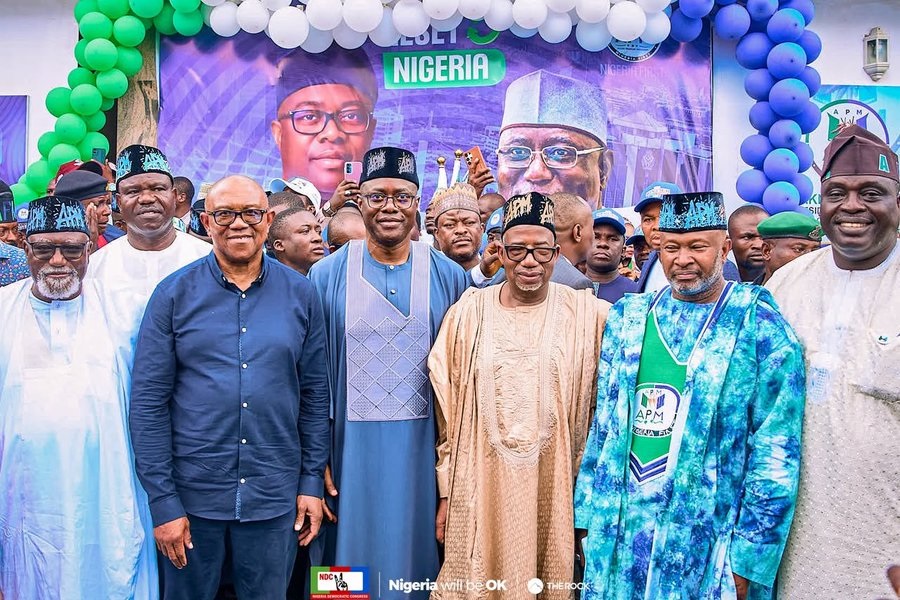
And it will test whether the coalition of political interests now surrounding his candidacy can remain united around a clearly defined national agenda.
Beyond the Promise
Ultimately, credibility in politics cannot be demanded. It has to be earned.
Peter Obi has made a promise Promise to Give back! Promise to get Nigeria Working, One Strong Attribute in a Person to bring that to bear is the Attribute of Credibility
That promise deserves neither blind acceptance nor automatic rejection.
It deserves scrutiny.
Nigerians should examine his past record, study his present proposals, question his assumptions and demand clear benchmarks for his future administration.
If his philosophy is that public office should be about what leaders give rather than what they receive, then the 2027 election offers the opportunity to hold him to precisely that standard.
Because in the end, the most convincing evidence of a politician’s credibility is not the promise made before power.