

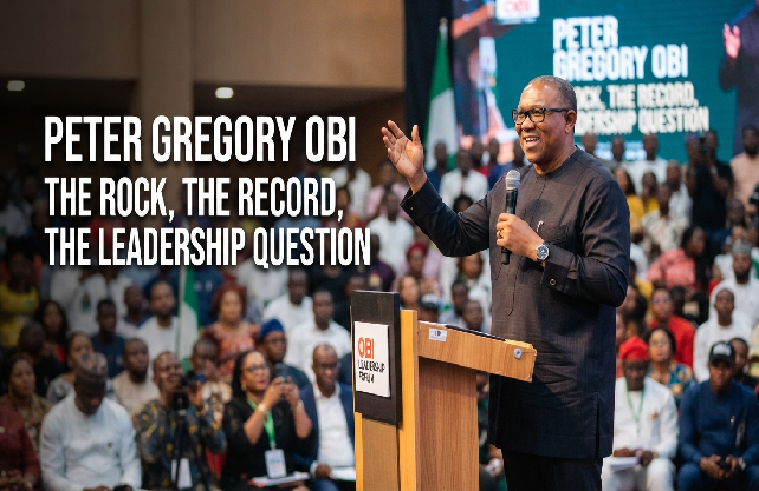
PETER GREGORY OBI
An Inspirational Acronym for Leadership, Integrity and National Transformation
By Pst. John I. Aregbokhai
Introduction: A Name with a Message
Leadership is more than occupying a political office; it is about serving humanity, inspiring hope, building trust, and creating a better future for generations yet unborn. Every nation needs leaders who understand that public service is a responsibility, not a privilege, and that the true measure of leadership is the positive difference it makes in the lives of the people.
In the Nigerian political landscape, the name Peter Gregory Obi has become associated with conversations about leadership, accountability, prudent resource management, and national transformation. Beyond political affiliations and personal opinions, his name can be creatively interpreted as an inspirational acronym carrying values that every aspiring leader and responsible citizen should consider.
This article explores the ideals represented by each letter of his name—not as an official acronym or a definitive judgment of his character, but as a framework for reflecting on the kind of leadership Nigeria needs.
PETER: The Foundation of People-Centred Leadership
P — People-Oriented
The people must always remain at the heart of governance. Leadership should focus on improving the living conditions of citizens, creating opportunities for young people, strengthening education and healthcare, and protecting the dignity of every Nigerian. A leader’s success should be measured not merely by the power he possesses but by the lives he positively influences.
E — Excellence
Excellence is the determination to pursue quality, competence, and measurable results. Nigeria needs leaders who are prepared to think deeply, plan wisely, and work diligently to achieve national goals. A nation cannot reach its full potential when mediocrity is celebrated and competence is neglected.
T — Transparency
Transparency is essential for building public confidence. Citizens deserve to know how public resources are managed and how important decisions are made. When transparency is supported by accountability and strong institutions, trust can grow, and public service can become more effective.
E — Equity
Equity means creating a fair society where opportunities are not restricted to a privileged few. Every Nigerian, regardless of background or social status, deserves dignity, justice, and a fair opportunity to succeed. National development becomes stronger when no community or group is deliberately left behind.
R — Responsibility
Leadership comes with responsibility. Those entrusted with public office must recognise their duty to serve, make thoughtful decisions, and accept accountability for their actions. Responsible leadership does not run away from challenges; it confronts them with courage, wisdom, and a commitment to finding lasting solutions.
GREGORY: The Principles of National Transformation
G — Good Governance
Good governance is the foundation of sustainable national development. It requires respect for the rule of law, effective institutions, prudent management of public resources, and policies that promote the welfare of citizens. Nigeria’s future depends greatly on the quality of its governance.
R — Resourcefulness
Resourcefulness is the ability to identify opportunities and make the best use of available resources. Nigeria possesses enormous human and natural potential. With strategic planning, innovation, discipline, and responsible management, these resources can contribute more effectively to economic growth and national prosperity.
E — Equity
Equity must be reflected in the distribution of opportunities, access to public services, and the protection of citizens’ rights. A nation grows stronger when every individual has a fair chance to contribute to its progress and benefit from its development.
G — Good Leadership
Good leadership provides direction, inspires confidence, and encourages collective responsibility. It is not merely about making promises or attracting public attention; it is about building capable teams, making sound decisions, and working consistently towards meaningful goals.
O — Optimism
Optimism is the belief that a better future is possible. Nigeria has faced numerous challenges, but despair should not become the permanent attitude of its people. Hope must be accompanied by practical action, responsible leadership, innovation, and the willingness to work together for change.
R — Reform
Reform is necessary when existing systems fail to deliver the desired results. Genuine reform requires courage, honesty, and the willingness to correct weaknesses in public institutions. It seeks to replace ineffective practices with better policies that promote justice, productivity, efficiency, and sustainable development.
Y — Yearning for Progress
A yearning for progress is a persistent desire to see society become better. It means refusing to accept unnecessary suffering as normal and continually seeking improvements in education, infrastructure, employment, security, and economic opportunities. The desire for a better Nigeria must translate into purposeful action.
OBI: The Character of Responsible Leadership
O — Outstanding Leadership
Outstanding leadership is demonstrated through service, competence, sound judgment, and the ability to inspire positive change. True leaders are remembered not simply for the positions they occupy but for the institutions they strengthen, the problems they solve, and the opportunities they help create.
B — Benevolence
Benevolence represents kindness, compassion, and genuine concern for the welfare of others. A responsible society recognises the struggles of the poor, the vulnerable, and the disadvantaged. Compassionate leadership seeks practical ways to reduce suffering and ensure that development benefits ordinary citizens.
I — Integrity
Integrity is one of the most important foundations of leadership. It means standing for truth, acting consistently with one’s stated principles, and respecting the trust placed in public officeholders. Without integrity, even the most attractive promises can lose their value. With integrity, leaders can build confidence and strengthen public institutions.
The Greater Message: Beyond Politics
The inspirational acronym PETER GREGORY OBI offers a valuable opportunity to reflect on the qualities that should guide leadership in Nigeria. People-oriented service, excellence, transparency, equity, responsibility, good governance, resourcefulness, optimism, reform, compassion, and integrity are principles that transcend political parties and individual personalities.
However, these ideals should not remain on paper. They must be translated into practical policies, responsible decisions, measurable results, and a genuine commitment to the welfare of the people. Citizens also have a responsibility to demand accountability, reject corruption, participate constructively in national affairs, and promote unity despite political differences.
Nigeria does not need leadership built solely on slogans, personality, or emotional loyalty. It needs leadership that values competence, protects public resources, strengthens institutions, creates opportunities, and gives citizens reasonable grounds to hope for a better tomorrow.
Conclusion: A Name, A Vision, A Responsibility
Peter Gregory Obi, interpreted through this creative acronym, becomes a reminder of the ideals that can inspire responsible leadership and national transformation.
The letters offer a message: put people first, pursue excellence, embrace transparency, promote equity, accept responsibility, encourage reform, and uphold integrity.
Ultimately, the future of Nigeria cannot rest on one individual alone. It requires a collective commitment from leaders and citizens to build a nation where justice is respected, public resources are responsibly managed, opportunities are expanded, and human dignity is protected.
May the search for leadership in Nigeria move beyond personalities to principles, beyond promises to performance, and beyond political competition to the greater goal of national development.
The greatness of a leader is not measured merely by the power he holds, but by the values he upholds, the people he serves, and the positive legacy he leaves behind.
— Pst. John I. Aregbokhai
Editorial note: The meanings assigned to the letters in PETER GREGORY OBI are creative, inspirational interpretations for this article. They do not constitute an official acronym or a verified assessment of Peter Obi’s personal characteristics or political record.






Leave a Reply