
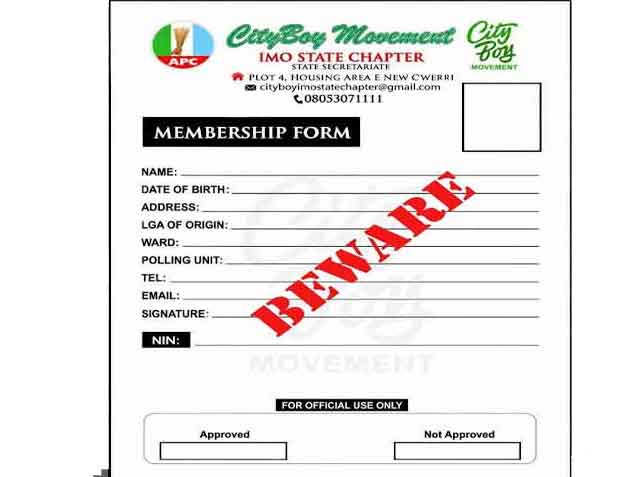
Data harvesting schemes involving the All-Progressives Congress (APC) in Nigeria have triggered urgent alerts from political opponents and community stakeholders. The primary concern involves operatives utilizing deceptive empowerment or poverty alleviation schemes to fraudulently collect highly sensitive and personal voter information.
The Mechanics of the Deceptive Scheme
Reports from regions like Osun State and Ogun East highlight a pattern of coordinated data extraction:
The Guise: Party agents approach citizens with official-looking forms promising access to federal “empowerment programs,” financial grants, or local poverty alleviation initiatives.
The Data Harvested: Unsuspecting individuals are asked to surrender highly critical identification tokens, including their National Identification Number (NIN), Permanent Voter’s Card (PVC) details, Bank Verification Numbers (BVN), and direct bank account information.
The Deceptive Intent: Political watchdogs, such as the Osun State Chapter of the Accord Party, have warned that these tactics are designed to hijack voters’ cards, manipulate local voter data, or economically exploit vulnerable citizens ahead of upcoming political cycles
Critical Red Flags to Watch Out For
Opposition leaders and civil stakeholders emphasize that no legitimate government empowerment or political party registration requires the collection of deep financial or national identity keys through informal agents.
Voter Card Demands: Genuine public welfare programs do not require citizens to turn over or log their PVC details.
NIN & BVN Collection: Handing over a NIN or BVN to party representatives should immediately be treated as a major security threat.
Financial Inducements: Any program offering immediate cash crumbs or “election-eve inducements” in exchange for filling out detailed personal profiles is highly likely to be a data-harvesting trap.