Village Boys: The Organic Awakening of Nigerian Youth Consciousness
Villages
Village Boys: The Organic Awakening of Nigerian Youth Consciousness
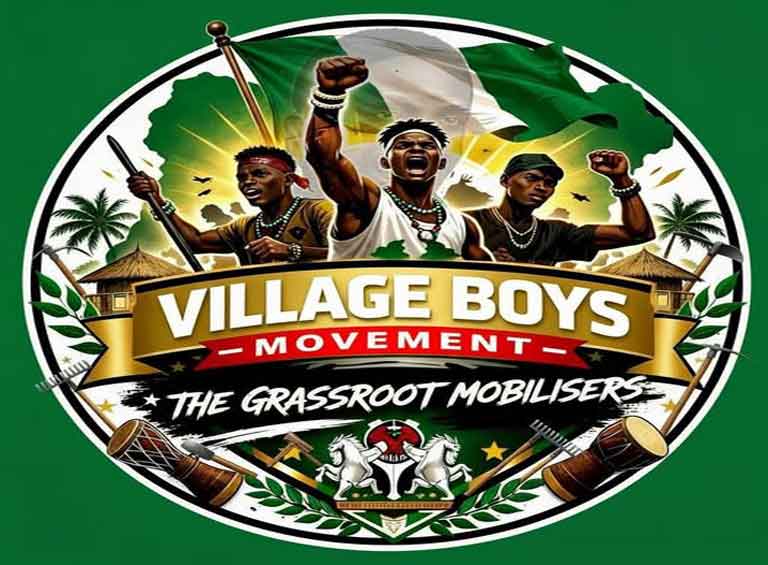
Across social platforms, campus debates, street corners, markets, tech hubs, and town hall meetings from Enugu to Kano, Ibadan to Uyo, a new phrase is rising with fire and conviction, Village Boys Movement.
It was not launched in a glittering hotel in Abuja,
It was not unveiled with press cameras flashing in Lagos,
It was not sponsored by political machinery or financed by powerful godfathers,
It grew quietly, organically, reactively.
And that is exactly why it cannot be ignored.
This is not a campaign.
This is not branding.
This is awakening.
A Movement Without Permission
The Village Boys Movement did not ask for validation from those in power, it did not wait for billionaires to nod approval, it did not beg entry into elite political circles.
It rose because something in the hearts of young Nigerians shifted.
Across ethnic lines and cultural divides, young people began to sense that their energy was being packaged, their loyalty commercialised, their identity reduced to spectacle.
In political sociology, this is called grassroots corrective mobilisation, when people feel used, they redefine themselves.
Village Boys is that redefinition.
From Igbo villages to Yoruba communities, from Hausa-Fulani villages and settlements to Tiv communities, from Ijaw creeks to Ibibio homesteads, from Nupe plains to Kanuri strongholds, from Edo kingdoms to Urhobo and Itsekiri lands, one message echoes across Nigeria,
We will not be rented voices.
We will not be decorative supporters.
We will not be used as symbols while our future is negotiated without us.
Why “Village” Is Not an Insult
In Igbo cosmology, the village is lineage, memory, moral accountability.
In Yoruba thought, the ile, the home, is sacred, it is identity itself.
In Hausa tradition, the kauye carries heritage, honour, communal responsibility.
Across Tiv, Ijaw, Edo and countless other cultures, the ancestral ground is not weakness, it is strength.
The village is where your name means something.
Where your father’s integrity follows you.
Where disgrace cannot hide behind social media filters.
To call yourself a Village Boy is not backwardness, it is rootedness.
It is saying, I know where I come from, and I refuse to be disconnected from it.
Substance Over Spectacle.
At the heart of this movement is frustration, raw and undeniable.
Youth energy must not be rented,
Influence must not be purchased,
Identity must not be commodified.
Where others see glamour, Village Boys see optics.
Where others celebrate proximity to power, Village Boys measure long term leverage.
Where others cheer access, Village Boys ask, what changes for the ordinary Nigerian?
This is not hatred of success.
It is hatred of manipulation.
This is not envy of wealth.
It is rejection of tokenism.
A National Cultural Recalibration
Nigeria was not built by applause, it was built by sweat.
By Igbo traders who started with nothing,
By Yoruba entrepreneurs who built industries from grit,
By Hausa-Fulani traders who sustained vast commercial routes,
By Niger Delta communities who carried the burden of resource wealth,
By Middle Belt farmers who fed the nation.
The nation’s real power has always been decentralised initiative, not centralised patronage.
Village Boys asks uncomfortable but necessary questions,
How do we build our local economies before chasing federal validation,
How do we strengthen our communities before seeking elite association,
How do we invest in productivity instead of performative loyalty?
This is not noise, it is a demand for seriousness.
The Danger of Losing Focus
Every awakening carries risk.
Passion without structure can become rage,
Identity without discipline can become division,
Energy without direction can become chaos.
If Village Boys is to endure as a national movement, it must be more than emotion.
It must define clear economic goals,
It must focus on institutional reform rather than personal attacks,
It must transform online solidarity into tangible enterprise,
It must promote unity across tribes instead of rivalry between them,
It must build businesses, cooperatives, and civic platforms that outlast hashtags.
If we claim the village, we must embody village values, restraint, honour, accountability, courage.
What This Moment Truly Means
Something fundamental is happening across Nigeria.
Young Nigerians are studying elite behaviour,
They are questioning symbolic alignments,
They are demanding generational respect.
This is not tribal extremism.
It is identity negotiation in a fragile federation.
It is exhaustion with spectacle politics.
It is anger at economic stagnation.
It is hunger for dignity.
It is a generation saying, we refuse to clap while our future is mortgaged.
Conclusion
Village Boys is not about romanticising rural life.
It is about reclaiming moral anchor.
It does not reject Lagos, Abuja, Port Harcourt, Kano, or Ibadan.
It rejects disconnection from origin.
If City energy represents access,
Village energy represents foundation.
And when storms shake the nation, foundation determines survival.
If this movement remains disciplined, strategic, economically constructive, and nationally inclusive, it could mark the beginning of a new phase of Nigerian youth mobilisation, one that draws strength from its roots, builds institutions instead of illusions, and refuses to trade dignity for applause.
This is not nostalgia.
This is reclamation.
This is resistance.
This is Nigeria remembering herself.
Join the Village Boys Movement on WhatsApp
https://chat.whatsapp.com/LJdeobr3lku8cVXtuGQpZU?mode=gi_tn